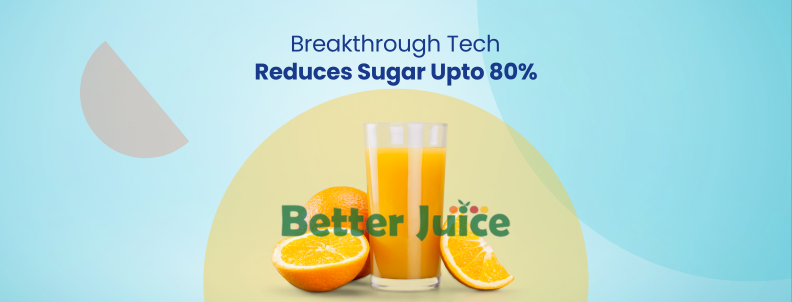


Scaling up Sugar Reduction to 80% – Insights from Eran Blachinsky, Co-founder Better Juice
As the demand for low-sugar food and beverage options grows, companies face the challenge of delivering the same great taste without compromising health.
Catering to the trend, companies and startups are exploring novel approaches and developing products that meet consumer demands.
One such startup we came across is Better Juice. The Israeli startup can cut up to 80% sugar in natural juices and fruit-based formulations.
Interested in diving deeper into the industry’s trajectory and the role their technology plays, we invited Eran Blachinsky, the co-founder of Better Juice, for an interview.
Author’s note: Upon researching, we came across many other startups that were working on Sugar Reduction Technology. Curious to know about them? Read this article next!
All the world is looking for sugar reduction. But unlike most of the companies, we are not replacing it. We are reducing it from the natural source.
– Eran Blachinsky, co-founder of Better Juice
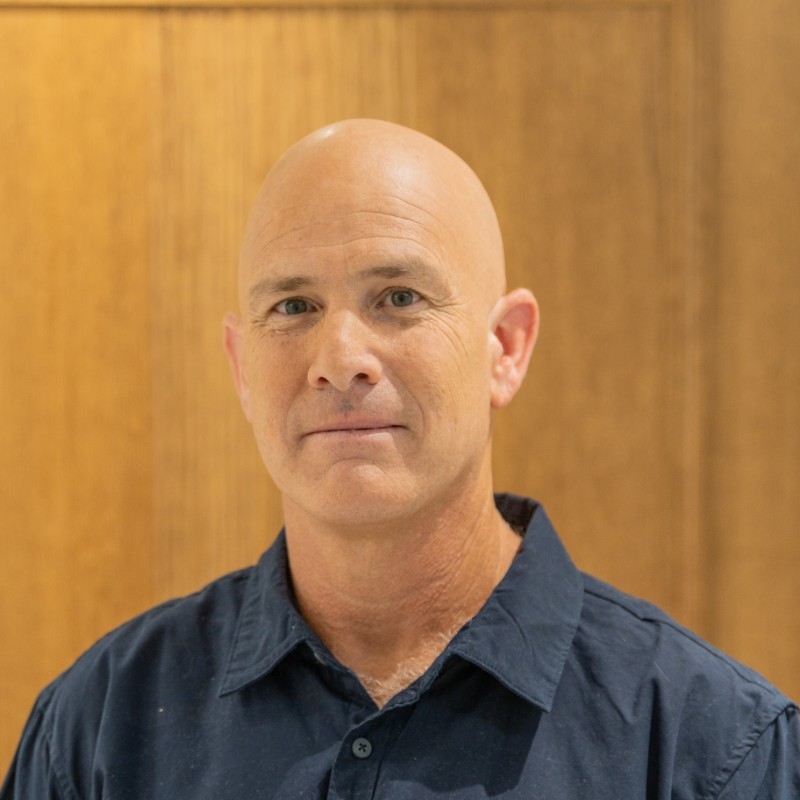
Eran Blachinsky is a visionary entrepreneur and the co-founder of Better Juice, a pioneering company in the field of food technology. With a Ph.D. in microbiology and an MBA specializing in life science initiatives, Eran possesses a rare combination of scientific expertise and business acumen. His startup has created a unique sugar reduction technology for naturally occurring sugary products, such as juices.
How did it go? Here, see for yourself.
Overview: Better Juice’s innovative Sugar Reduction Technology
The company employs non-GMO enzymes housed in a bioreactor for continuous juice flow. During this process, sugars within the juice undergo specific transformations: glucose converts to gluconic acid and sorbitol, while sucrose transforms into dietary fibers.
This versatile solution accommodates various sugar compositions found in different foods. For example, grapes are rich in glucose and fructose, while oranges have higher sucrose levels alongside lower glucose and fructose content. The technology effectively addresses different sugar profiles across diverse food types, reducing sugar to 80% even in concentrates.
The equipment required for the process is being developed in collaboration with GEA, a leading German food production company. Companies purchasing the equipment also acquire mobilized enzymes from the same source. The collaboration ensures a seamless workflow, with the mobilized enzymes requiring replacement every two months. Manufacturers obtain new batches of enzymes after utilizing the previous ones for two months. GEA oversees the unit’s installation, including steel components, and provides spare parts, to effectively manage the enzymatic process.
Not only this, in 2022, GEA and Better Juice launched a pilot program in Germany, where they enabled participants from different parts of the world to bring their juices for treatment and leave with treated juices for conducting commercial tests or desired experiments.
Highlights from the conversation
Short on time?
Here are key highlights from the discussion.
Does your technology impact the flavor profile of processed food?
We undergo a conversion process with sugar rather than removing it completely, ensuring it remains a binding agent. Consequently, there are no significant changes in mouthfeel.
From a sensory standpoint, there is a slight reduction in sweetness alongside the sugar reduction. However, it’s important to note that the reduction in sweetness doesn’t correspond directly to the percentage of sugar reduction.
For instance, a 30% sugar reduction wouldn’t equate to a 30% reduction in sweetness since other components, such as dietary fibers and sorbitol, still contribute to the overall sweetness. This means that the sweetness reduction may be around 20% or so.
Additionally, our enzymatic process eliminates any concerns regarding off-label additions. We don’t introduce anything new to the juice, but rather the sugar and acid balance is slightly adjusted, resulting in a subtle increase in sourness. Nonetheless, the juice remains highly enjoyable, particularly for adults who often find regular juices excessively sweet.
Through our bioreactor process, the juice transforms, bringing out flavors that were previously hidden due to high sugar content, enhancing both the tartness and acidic characteristics. These aspects become more apparent and comprehensible.
What were the main challenges you faced during commercialization?
Currently, there isn’t a product in market that offers same level of sugar reduction. As pioneers in this field, there is always a fear of being the first to introduce such a groundbreaking technology. Progressing gradually, we are navigating through this uncharted territory.
We already have a commercial unit established who are actively engaged in promoting and selling this technology to juice manufacturers. Once the technology becomes widely recognized, it will facilitate our market entry.
Can your technology help reduce sugar in other sugary products like chocolates or ice creams?
We’re currently focused on utilizing pure concentrate to create ice cream, representing how our technology extends beyond juice and can be applied in various other contexts.
Regarding chocolate, it is a completely synthetic product, relying solely on cocoa as its essential ingredient. As everything in chocolate is extracted from cocoa, and it is already a natural substance, we don’t have any additional contributions to make in terms of technology.
Do you have any plans targeting Asian countries?
Indeed, I have plans to travel to Singapore next week, so that’s definitely a yes!
Meet our Interviewer – Vikas Jha, AVP, Solutions at GreyB

Vikas Jha is an experienced tech consultant focusing on Intellectual Property Consulting. With expertise in diverse domains like Telecom, Navigation, and Medical Devices, he helps clients navigate innovation challenges. Vikas has been featured on CNBC for his insights on space-related advancements. His ability to bridge technology, innovation, and leadership makes him a valuable resource in the evolving tech landscape.
Want to scout other innovative startups in sugar reduction?
Look no further – our comprehensive report has all the answers you seek!
Fill out the form below and get your hands on our report.
Authored By: Ridhima Mahajan, Marketing
Next Read: Top FDA-Approved Sugar Reduction Solutions You Should Know