Invalidating formulation patents is generally more complex than usual patents because they include different components mixed together in a certain amount to make that formulation stable or viable. While the concept might seem simple, pinpointing the exact percentages and considering external factors that influence these values significantly complicates the search process. Geographical origin, storage conditions, and transportation methods can all impact component values, adding another layer of complexity to invalidation efforts.
However, this case study presents a successful strategy in action to overcome the above complexities of invalidating formulation patents. It highlights the importance of understanding the inherent or standard values of the ingredients involved. Eventually, analyzing the specifics of this case will provide valuable insights and a strategic framework that can be applied to patents related to food formulations, beverage formulations, pharmaceutical formulations, chemical formulations, paint formulations, concrete formulations, cosmetic formulations, etc.
Background of the case
The subject patent claimed a concrete formulation using a blend of pozzolan and calcium compounds (including limestone), with a specific moisture content of 3% in the pozzolan.
Challenges Faced while Invalidating Formulation Patents
The initial phase of an invalidity search on this formulation patent centered around keyword and classification-based searches. However, it revealed an initial challenge marked by limited activity within the domain. Despite broadening the search parameters, there was a scarcity of relevant references. The screening process further highlighted the complexity, as the concept sought was not directly disclosed in the patents reviewed, rendering many patent findings irrelevant.
The strategy then evolved to incorporate narrow ranges for claimed moisture content derived directly from patent disclosures, aiming to pinpoint relevant prior art. However, this approach encountered obstacles due to variations in value representation across different sources. For instance, searching for “5% calcium in milk” would retrieve results encompassing diverse animal sources, each with potentially distinct calcium content variations.
But the challenges didn’t end there. The inherent variability of moisture content due to factors like transportation, geographical location, and storage posed another significant challenge. Locating precise value references within the patent literature proved extremely difficult under these circumstances.
Expanding the Search to Patent Literature for Invalidating Formulation Patent
In pursuit of overcoming the limitations encountered in traditional patent literature searches, the patent invalidity search expanded to non-patent literature (NPL). While searching for the claimed process and specific moisture content values, it unveiled an industry trend: a transition from natural to artificial pozzolans, driven by the latter’s increased availability and consistency. Additionally, the historical use of lime-pozzolan mixes in Roman constructions offered a potential lead, suggesting the possibility of finding prior art within historical records.
This information became the next source of inspiration, and further exploration into the history of natural pozzolan use in construction revealed standard specifications for its application in concrete. A website highlighted that finely dividing pozzolan can significantly reduce its inherent moisture content. This reduction necessitates standard tests to ensure that the specified air content within the concrete mixture is maintained.
This sparked a key hypothesis: could pozzolans possess a standard, inherent moisture content that is independent of external factors? To test this theory, we conducted a targeted search within standardized literature and located a document that mentioned a standard value of moisture content present in the natural pozzolans.
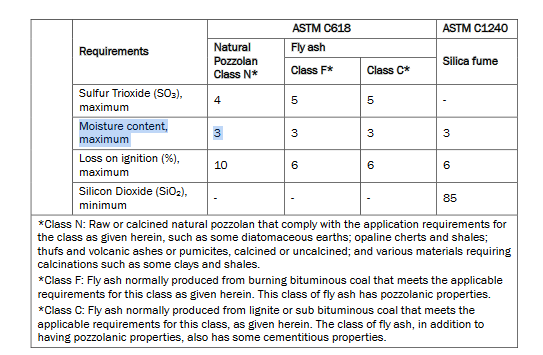
The document pinpointed the specific moisture content of 3% in the natural pozzolan, just as claimed in the subject patent. While preparing the claim chart, this information challenged the validity of the patent on the grounds of obviousness, which would have been impossible if we hadn’t studied the ecosystem of the patent.
Conclusion
This particular case study exhibits that successful prior art searches for formulation patents extend beyond mere keyword searches. For invalidating formulation patents, it is important to look out for their standards or inherited values if there is no disclosure of the exact values in the patent literature. By conducting interdisciplinary research, analyzing external factors, and considering inherent properties, one can develop effective strategies for invalidity search cases.
Not sure how to use this strategy to create a winning claim chart?
Let the experts develop a tailored strategy to meet your case’s unique needs.

Read More Case Studies on Invalidating Formulation Patents:
How we challenged a formulation patent based on its claim language?
Using Non Patent Literature for invalidating Whey Protein formulation patent
How we found prior art for an infant food formulation company using USDA data?
Authored by: Vikrant & Nandini, Life Sciences Team
Edited by: Annie Sharma