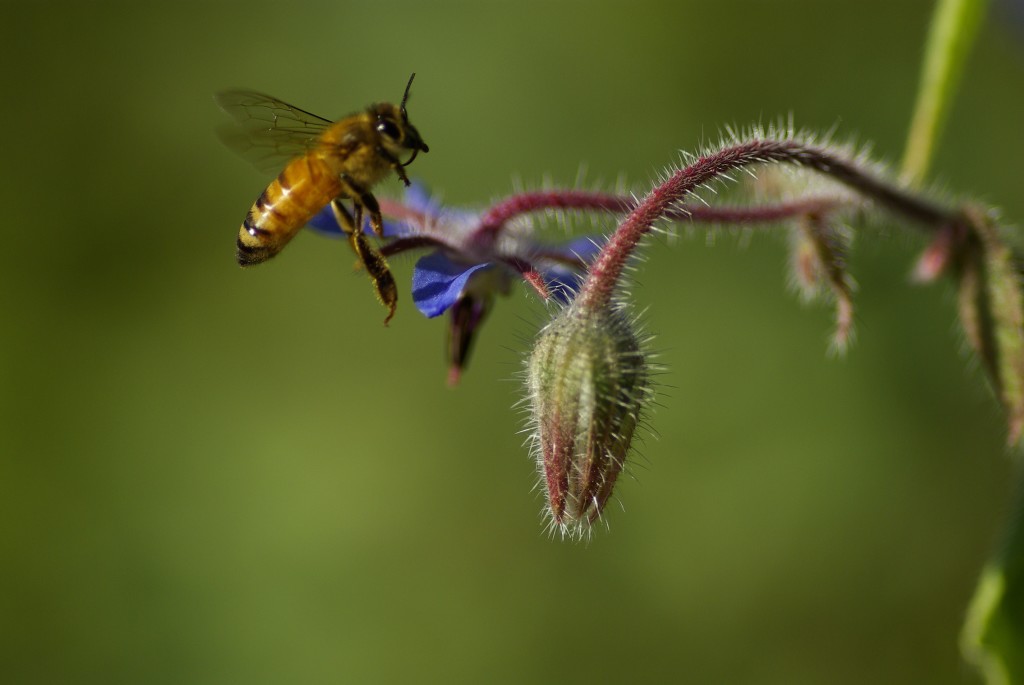
I was leaning in my chair while watching those bees through the steam of my coffee. They were four in number, flying from one plant to another, from one flower to next, collecting the sugary nectar.
When they were fully loaded, which was a task completed sort of thing for them, they flew back. The flowers of those plants – were quite lucky, I thought – could now reproduce with greater variety.
The flying train of those bees on the flowers, meanwhile, reminded me of one of the recent projects that we received some days back from a client on “Call Transferring in SIP”. The client suggested us to thoroughly check the IETF standards.
The bees do it naturally, I thought, and we do that, too. We also cross-pollinate ideas to find the nectar.
In the beginning of the project, we followed the conventional path – searched patents and IETF standards – and found the same concept published after the priority date. To top it all, the research papers that surfaced also had a later publishing date. In the due course, it became arduous to find any patent as well as non-patent literature disclosing the concept before the priority date of the patent.
Time and again, we find ourselves in such situations. It is at those moments when we live by this saying at GreyB:
If a project gets harder, challenge yourself to conduct an even stronger research.
Way back in 2011, I read about a tool by Broad Institute of MIT and Harvard that can detect patterns in a sea of data. I thought of trying the same thing. I analyzed the data that I had, to connect the dots and check if there are any subtle patterns lurking in the set that can give me what I am looking for.
After spending few minutes, I spotted one such pattern. I observed that the subject patent was researched a lot at the University of Columbia. Not only this, but I also found that the inventors of the patents were associated with the university. There were lots of patents and research papers from this University too. Hence, I decided to search for the conference papers and research papers from this University.
 While exploring the University website, I stumbled upon a link directing to the FTP server of University that hosts its research papers, theses and conference papers.
After skimming through hundreds of research papers, I finally found something I was hunting for such a long time. I found some literature where inventors were among other authors, disclosing similar concepts. The first author, however, was not among the inventors of the patent.
I also found one folder in the FTP server hosting research papers of that researcher. Great find! I had the feeling that this was it. I started the grunt work and pored through all the research papers in that folder.
Voila! I finally found a paper discussing the same concept with publication date before the priority date of the patent under consideration. With the help of that reference, we were able to build a stronger case for validity.
In all this, the twist was that when we tried to open the same FTP link from the browser or search its content on Google, it didn’t appear. That project taught us two lessons:
One, results in Non-patent literature are not limited to searchable content only. Secondly, you have to be observant to modify your search strategies to find existing prior art.
Authored By: Nikhil Gupta, Manager, Search Team.