



Securing a ruling in your favor in an infringement case is a win, but translating that into a fair financial recovery is the real challenge.
This scenario is all too common. You’ve built a winning claim chart and proven infringement, yet the proposed damages for patent infringement fall far short of reflecting the true value misappropriated.
To combat this issue, this article explores the strategy of using market research to strengthen your case for appropriate damages. We’ll showcase a real-world example of market research helping a client gather evidence to obtain a more accurate reflection of the infringement’s impact.
When the infringement case win isn’t the actual victory!
In a recent case, our client successfully prevailed in court after demonstrating clear infringement of their patent by the defendant’s product. An Evidence of Use (EoU) claim chart documented the overlap between the patent and the product.
However, the defendant proposed a meager damage award of only a few hundred dollars. This amount did not reflect the significant investments our client had made during litigation, nor did it account for the high revenue generated by the infringing product.
Therefore, the aim from here was to gather evidence that exposed the extensive usage of the infringed technology and refuted the defendant’s limited claims. To achieve this, we needed to delve deeper and collect backend data on user engagement and revenue streams associated with the infringing product.
An integrated approach to increase damages for patent infringement
The defendant’s infringement damages calculation was focused solely on instances where users directly interacted with the infringing features. Our strategy, however, aimed to uncover all conceivable sources of revenue.
In addition to direct sources like in-game purchases, we explored hidden channels, such as showcasing the product’s reach using impressions data and further analyzing offline events, factoring in attendance metrics and ticket sales revenue.
We found several modes through which revenue could have been generated by the infringed product, such as –
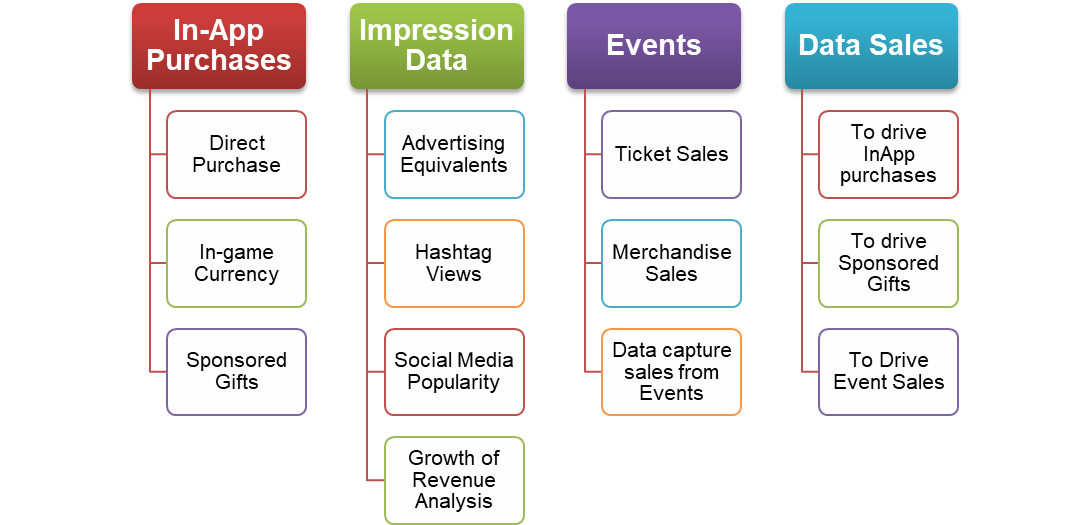
Data Sales:
Investigating the infringing product’s ability to collect user data revealed that it did indeed collect user data. Examining user agreements and privacy policies demonstrated the potential for this data to be sold to third-party companies for targeted advertising or market research purposes, generating significant revenue for the infringer.
In-App Advertising:
While in-game purchases were mentioned, we also identified the presence of in-app advertising within the infringing product. This included banner ads, sponsored content, and video ads. Analyzing advertising placements, potential click-through rates, and user data made estimating the substantial revenue generated from these sources easy.
Impression Data:
We went beyond in-app data and explored the product’s reach on social media platforms. By analyzing hashtag views and social media popularity metrics, we demonstrated the potential for the infringing product to generate revenue through influencer marketing or sponsored content deals.
The comprehensive data gathered through market research was found to be interconnected with each other and helped the plaintiff generate profit from a free-to-play product. As a result, the approach strengthened the client’s argument for a higher infringement damage award.
Conclusion
The approach outlined here is beneficial in a wide range of patent infringement cases. Whether you’re representing a plaintiff seeking fair compensation or a defendant facing potential infringement claims, understanding all the potential revenue streams will significantly impact the outcome.
Reach out to our team of experts for a more in-depth discussion on how market research can be tailored to your specific case and IP needs.
Authored By: Divyanshu Singh & Annie Sharma