

Buildings and construction remain central to global decarbonization efforts, given the sector’s scale and slow rate of progress.
The Global Status Report for Buildings and Construction 2024/25 estimates that in 2023 the sector accounted for 32% of global energy demand and 34% of CO2 emissions.
Operational emissions reached a record 9.8 Gt CO2, while embodied carbon from construction materials accounted for approximately 2.9 Gt CO2.
Moreover, sector emissions have increased by around 5% since 2015, diverging from a Paris-aligned pathway that would require an estimated 28% reduction by 2030.
Safety expectations are also rising. FEMA estimates 344,600 U.S. residential building fires in 2023, reinforcing the importance of fire-resistant assemblies and better-performing materials.
The article examines how the challenges, sustainable goals, government regulations, and smart technologies are shaping key construction trends.
1. Bio-Based and Recyclable Materials
Bio-based and recyclable materials are at the forefront of a green construction renaissance. As governments worldwide push for decarbonization, construction firms are being held accountable not just for operational emissions but for embodied carbon. According to the World Green Building Council, embodied carbon will account for nearly 50% of total new construction emissions by 2050 (Source).
“The update to the WorldGBC’s Net Zero Carbon Buildings Commitment elevates the ambition for the building and construction sector to go further and faster to decarbonise. It sets a target for compensating for emissions associated with buildings and construction, and the tangible social and environmental co-benefits of this approach creates a powerful catalyst towards achieving the Paris Agreement goals and the Sustainable Development Goals. Achieving our vision of sustainable buildings for everyone, everywhere means acting now to tackle upfront carbon, whilst planning with whole life carbon in mind.”, Cristina Gamboa, CEO of the World Green Building Council.
This has led to an uptick in demand for wood, hemp, bamboo, straw, recycled plastic, cellulose, cork, and other renewable or reused materials that perform well without generating new carbon-intensive outputs.
Europe is already leading in adoption, with over 50% of buildings in Nordic countries now using timber frames or bio-insulated walls. Sweden and Finland have even enacted national frameworks to prioritize wood in public building procurement.
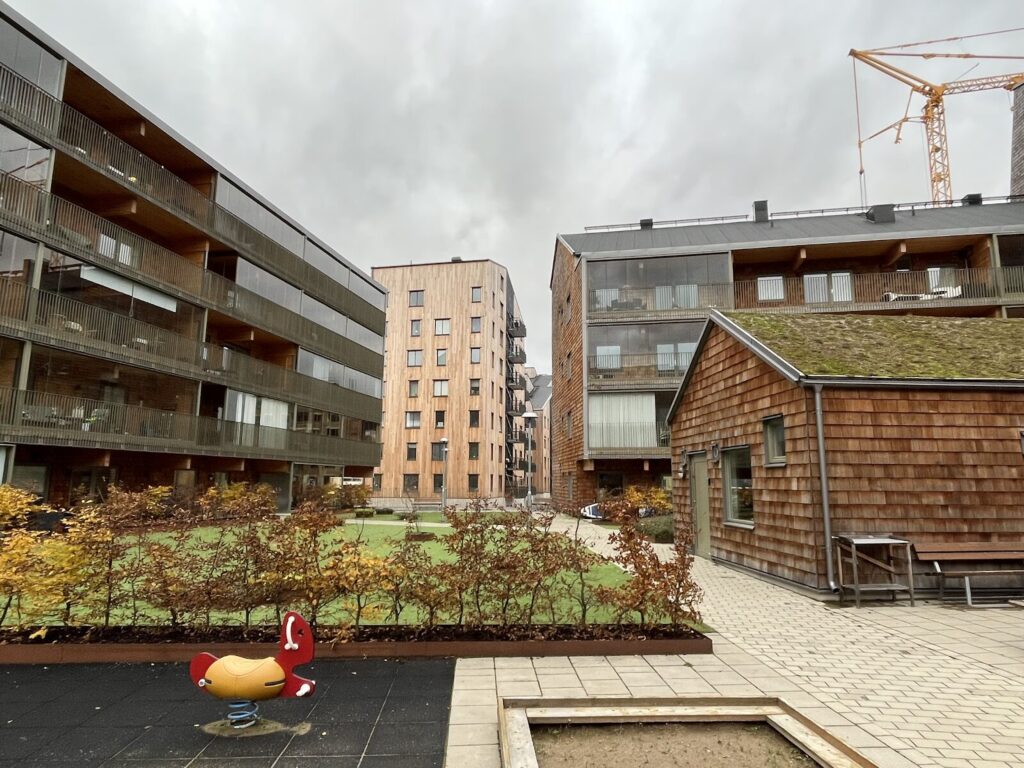
Asia Pacific accounted for the largest revenue share of 33.4% in the global bio-based construction materials market in 2024, reflecting strong regional demand. This leadership is underpinned by fast-growing construction activity, abundant biomass feedstock, and government-backed green building programs that encourage the use of bio-based products.
Programs such as India’s GRIHA and China’s green-building rating schemes support the adoption of low-carbon materials in new urban, smart-city, and infrastructure projects. International bio-material suppliers are increasingly partnering with local manufacturers to scale up production and improve cost competitiveness in Asian markets.
China’s bio-based construction materials market is shaped by national “green transition” and circular-economy policies that target lower carbon intensity and higher resource efficiency in the built environment. Regulations and five-year plans promoting greener buildings and greater use of recycled and renewable resources are encouraging alternatives to conventional concrete and insulation.
Ongoing urban expansion, export-oriented manufacturers, and initiatives linked to overseas infrastructure, such as Belt and Road projects, are helping broaden demand for bio-based and other eco-friendly materials. Growing environmental awareness among urban residents further supports the uptake of sustainable construction solutions in major Chinese cities.
Despite the momentum, moisture sensitivity, fire-code compliance, and limited regional supply chains present significant hurdles.
However, companies are researching to solve these challenges.
For example, Fraunhofer has created a new flexible, recyclable PLA-based film that can technically and economically replace LDPE in bags and similar packaging while remaining largely bio-based.
Researchers developed a PLA block copolymer in which non-toxic polyether plasticizers are covalently bonded to PLA chain segments at both ends, preventing their migration over time.
This creates a durable, flexible PLA material that behaves like LDPE film but is at least 80% bio-based and potentially close to 100% in the future.
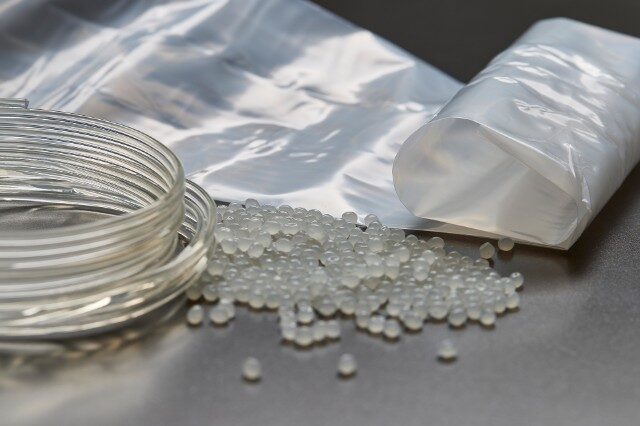
Covalent anchoring of polyethers overcomes PLA’s inherent stiffness without using conventional migrating additives that hinder recycling and may be harmful or fossil-based.
The material can be synthesized cost‑efficiently from commercially available, potentially bio-based raw materials in continuous processes suitable for medium-sized companies, processed on existing LDPE film lines, and chemically recycled with significantly lower energy input than LDPE.
It is already being commercialized as Plactid®, with a current capacity of 2,000 tons per year and a target of 10,000 tons, and could extend beyond packaging into automotive, textiles, and additive manufacturing.
2. Fire-Resistant Wall Systems
Fire-resistant wall systems are trending because the industry is being pushed toward safer, more verifiable building-envelope performance, especially as buildings get taller, denser, and more complex.
A significant factor is regulation: The 2024 International Building Code (IBC) introduced more precise requirements for the continuity of exterior-wall fire-resistance ratings (how the rated wall must extend vertically and connect to rated floor/roof assemblies), reducing ambiguity in common floor-to-wall conditions.
The same update also consolidates and strengthens performance expectations for exterior wall assemblies that include combustible components. It explicitly calls out combustible exterior wall coverings, combustible insulation, and combustible water-resistive barriers (WRBs). It further ties acceptance to fire-propagation testing (e.g., NFPA 285, where applicable).
Risk and liability pressures reinforce the trend. Large-loss façade fires have made owners, insurers, and authorities more sensitive to how quickly fire can spread on a building’s exterior, increasing demand for tested, system-level solutions rather than material-only claims.
Finally, there’s a resilience driver: as wildfire exposure and heat events become more prevalent in many regions, fire-resistant separation and noncombustible exterior finishes are increasingly incorporated into broader climate adaptation and business-continuity planning.
More than 20 countries updated facade-related fire codes in the past five years. There seems to be a global movement to strengthen fire-safety regulations for building facades, driven by incidents such as the Grenfell Tower fire and growing awareness of the risks posed by combustible cladding.

Middle Eastern and APAC nations, including the UAE and Australia, are banning combustible ACP cladding and raising flame-spread standards.
Technological solutions include non-combustible claddings such as fibre-cement and terracotta, intumescent coatings that expand at high temperatures, and mineral-wool boards that retain integrity above 1000°C. Yet, affordability and ease of installation remain issues.
For example, ROCKWOOL highlights stone wool as intrinsically non-combustible and capable of withstanding temperatures above 1,000°C, positioning it for fire-resistant applications and meeting increasingly stringent safety requirements.
In parallel, material science is opening new pathways: geopolymer-based building materials are being studied because aluminosilicate networks and refined pore structures can improve high-temperature behavior, creating potential for fireproof panels or protective coatings.
Recent research also frames geopolymers as candidates for insulated wall systems that balance energy performance with heat resistance, aligning fire safety with decarbonization goals.
3. Smart Exterior Technologies
These technologies are on a clear growth trajectory within the broader façade market, driven by decarbonization, energy‑efficiency regulations, and maturing digital/solar technologies. And, innovation is clustering around dynamic/adaptive façades, energy‑active skins, and AI‑driven envelope control.
Within the façade ecosystem, “smart” or intelligent façade systems are still a sub‑segment by value but are growing much faster than conventional cladding. The intelligent façade systems market is expected to grow from about 276 million USD in 2024 to roughly 756 million USD by 2034, with a CAGR of around 10.6%, which clearly outpaces the 8% CAGRs projected for the broader façade systems market.
Energy‑active façades, especially BIPV, add another strong growth engine atop the “smart” category. Building‑integrated photovoltaics façades alone are projected to grow about 28.3 billion USD by 2034, as developers integrate PV modules into glass and cladding from the design stage.
New construction dominates BIPV façades with more than 70% market share because integrating PV into the envelope is much easier, cheaper, and architecturally cleaner when done from concept design rather than retrofit.
Policy and regulation are the fundamental demand engines for smart exterior technologies. Many jurisdictions now require steep reductions in operational energy and carbon, with building energy codes tightening envelope U‑values, solar heat gain limits, and airtightness while simultaneously encouraging on‑site renewables.
Smart façades directly support these mandates by combining high‑performance insulation, dynamic solar control, and integrated PV, thereby reducing HVAC loads and generating electricity on the same surface area.
Green building certifications such as LEED, BREEAM, and various net‑zero frameworks explicitly reward advanced envelope strategies, so developers seeking certification have a strong incentive to adopt intelligent shading, daylighting, and BIPV façades.
On the innovation front, the most active area is dynamic/adaptive building envelopes—systems whose geometry or material properties change in response to environmental stimuli.
Academic and industry reviews describe a broad family of Dynamic Adaptive Building Envelopes (DABEs) that integrate active shading devices, movable louvers, adjustable openings, and controllable cavities within double‑skin façades to regulate heat, light, and airflow.
These systems increasingly rely on embedded sensors and actuators linked to control algorithms that weigh multiple objectives—thermal comfort, glare, daylight autonomy, and energy consumption—and adjust façade elements in real time.
Research argues that such dynamic behavior is more promising than static high‑insulation envelopes alone, because it allows buildings to exploit beneficial solar gains in winter while blocking excess in summer, without sacrificing transparency and architectural expression.
Bio‑inspired and material‑driven adaptivity is another frontier. Biomimetic envelope research surveys how plant and animal skin strategies, like hygroscopic opening/closing, color change, or structural reconfiguration, can inform new façade materials that respond passively to humidity, temperature, or light without external power or complex mechanics.
The proposed bio‑adaptive model suggests transferring functions such as self‑shading, self‑ventilation, or self‑cooling into building envelopes via smart materials that swell, bend, or change opacity as conditions change, essentially embedding “logic” into the material.
Phase‑change materials within façade layers also fall into this trend, using latent heat storage to buffer indoor temperatures and smooth peak loads as the building interacts with outdoor conditions.
Energy‑active façades represent another major innovation cluster, driven by BIPV and improved integration of PV into glass and cladding systems. Recent market and technology reports highlight rapid advances in double‑ and triple‑glazed PV glass that combine high insulating performance with high energy yield, enabling curtain walls and spandrel panels to serve as both thermal barriers and power plants.
Heliatek GmbH develops organic photovoltaics (OPV): ultra-thin solar films that generate electricity using organic semiconductor layers.
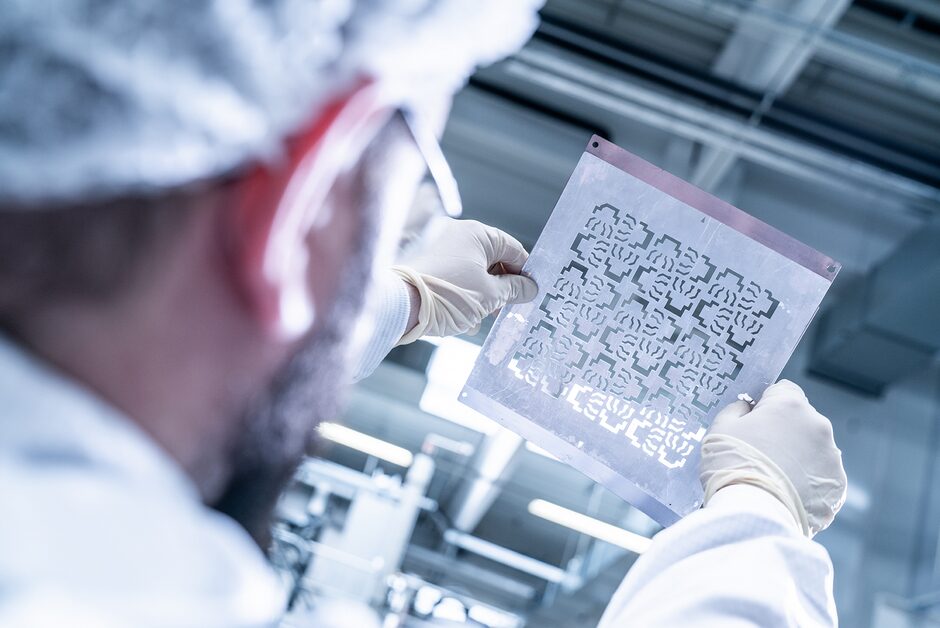
Instead of crystalline silicon cells, Heliatek deposits multiple functional organic layers onto a flexible carrier film, forming a thin-film “stack” that absorbs light and separates charges to produce direct current.
The stack is made in a roll-to-roll line using thermal evaporation under vacuum, enabling continuous coating of large film reels. After deposition, the film is encapsulated to protect sensitive organic layers from air and moisture, then finished with electrical interconnection (e.g., cables/junction box) and backside adhesive for integration onto building surfaces.
Conclusion
From smart façades and bio-based walls to fire-safe, efficient envelopes, the building shell has become a vital frontier for innovation. As we navigate the complexities of climate change, urbanization, and rising performance expectations, it’s clear that shells can no longer be treated as afterthoughts.
They must now function as integrated systems.
For players across the ecosystem, these trends offer opportunities to lead. Companies must act now to adapt, optimize, and innovate in building shells not only to stay ahead of regulatory changes and market shifts but also to deliver more resilient, sustainable, and intelligent built environments.