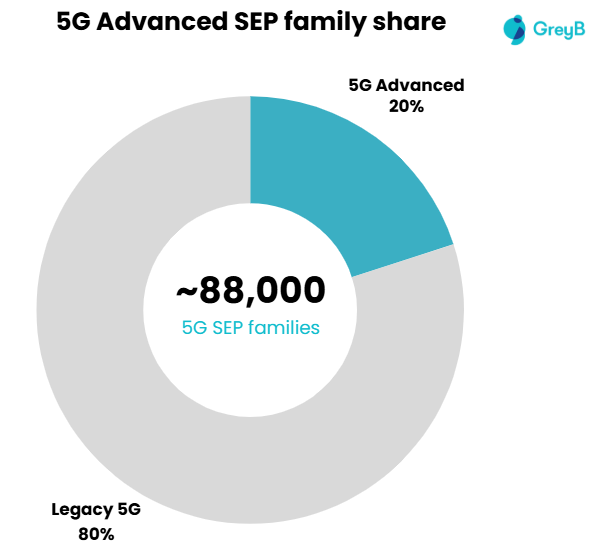
20% of the 5G patent landscape is now dedicated to 5G-Advanced, reflecting the critical R&D investment in this next-generation technology. Supported by over 87,581 technical proposals submitted to 3GPP, this shift is defining the future of mobile networks.
GreyB brings its expertise to the 5G SEP Ownership Report, offering clear strategic insights into how businesses can adapt to the evolving 5G-Advanced landscape.
How to Use 5G-Advanced Analysis to Your Advantage
1. Optimize Your R&D Focus
20% of all declared 5G patent families are now focused on 5G-Advanced, supported by 87,581 technical proposals to 3GPP. By directing R&D efforts toward technologies such as Performance & Efficiency, Service Expansion, and the Bridge to 6G, you can position your business at the forefront of this transformation.
2. Unlock Licensing Opportunities
Over 18,000 declared 5G patent families are part of the 5G-Advanced landscape. Leverage standard-essential patents (SEPs) to ensure your portfolio is strategically aligned for future licensing discussions. This ensures you are well-positioned as key industry players shape the standards.
3. Prepare for Future Litigation
With over 18,000 declared patents in the 5G-Advanced space, the absence of a formal patent pool increases the risk of licensing disputes. Understanding patent ownership and leveraging this data allows you to mitigate potential litigation risks and strengthen your position in the market.
Report Highlights
Key Intelligence: The Bridge to 6G
Pillar 3 (AI/ML, NTN, ISAC) is the primary R&D innovation ground, yet holds less than a quarter of declared SEPs. This confirms that the most valuable patents are pending declaration.
Actionable Urgency: IP leadership must launch a preemptive declaration program for Pillar 3 assets now. The report names influence leaders like **Nokia, Huawei, and Ericsson** actively shaping these core 6G standards.
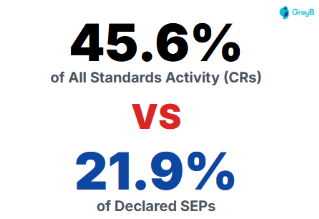
Licensing Warning: Many-to-Many Negotiation
The growth of mid-tier SEP ownership has shattered the traditional few-to-few licensing model. Negotiations will escalate to complex, costly, many-to-many discussions across new verticals like AIoT and NTN.
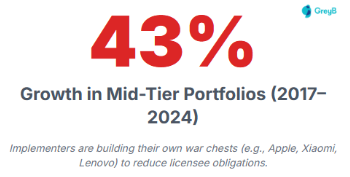
This strategy is clearly visible in the report’s four quadrants. Legal teams must understand the Quadrant 4 implementer strategy and mitigate the increased legal complexity and transactional costs of future negotiations.
R&D Strategy & Monetization
The value of SEPs is shifting from general network performance (Pillar 1, primarily Efficiency IP) to high-margin, specialized application services enabled by Pillar 2 & 3 IP. Technologies like ISAC (Sensing Grid) and NTN (Global Connectivity) transform the network’s function, demanding a radical re-evaluation of your IP valuation.