

Engineered with specific functionalities and technical performance in mind, technical textiles are capturing the attention of global markets. Notably, countries such as the UK, Germany, and India have made significant investments in developing these textiles.
Furthermore, their rising popularity can be attributed to their versatility and wide range of applications, spanning areas such as Geotech, Buildtech, and Packtech.
Download the Sustainable Textile Trend Report to get insights on the new trends.
In this article, we will examine the potential of technical textiles and the global interest surrounding the development of this industry.
Where are the Technical Textiles heading?
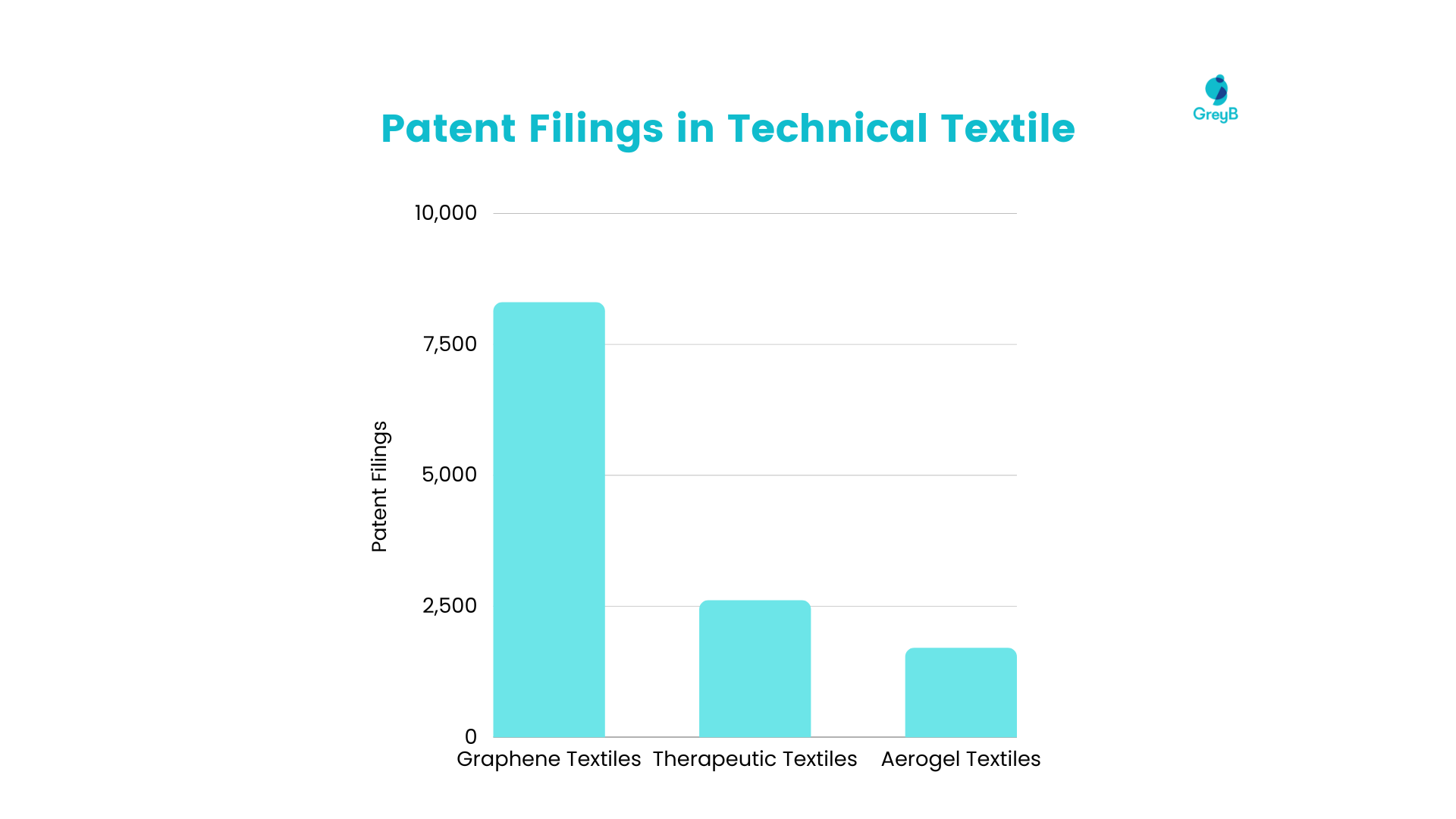
Recent research activity has identified Aerogel, Graphene, and Therapeutic textiles as the three prominent types of trending technical textiles. The graph below shows the surge these textiles have witnessed in innovation, leading to many patents filed in these fields.
Let’s look at some of the notable innovations in the field –
Aerogel-based ultrathin jackets with high thermal retention
Oros Apparel, a US-based clothing startup, has developed a patented technology called ‘SOLARCORE’ for their aerogel-based clothing line. This innovative fabric combines aerogel with flexible foam, providing superior thermal performance with fewer insulation layers.
The fabric, made of recycled polyester and closed-cell foam, enhances warmth retention, mobility, and performance. The company claims that SOLARCORE can maintain an internal temperature of 32°C, even in extreme cold as low as -196°C.
Increasing Durability Of Textile Heating Elements With Graphene
Amperetex, a Russia-based heating fiber producer, partnered with OCSiAl, a carbon nanotube manufacturer in Luxembourg, to create an ultrafine polymer fiber infused with OCSiAl’s TUBALL graphene nanotubes. This collaboration resulted in the development of flexible textile heating elements that require minimal electric power.
By incorporating small doses of graphene nanotubes, the engineered fiber modifies polymer fibers to possess heat-generating properties. Durability tests conducted on the fiber demonstrated its longevity of 30,000 cycles, equivalent to approximately 30 years of lifespan.
Incorporating Essential Oil In Therapeutic Textiles
West Virginia University (USA) and Central Michigan University (USA) have collaborated to explore using textiles as carriers for essential oils with therapeutic properties.
To protect the fragrance, bioavailability, and pharmaceutical effects of hydrophobic essential oils, they are encapsulated within capsules. These capsules can be designed to release their contents under specific chemical, physical, or mechanical conditions, enabling a controlled and prolonged release of the aroma for long-term benefits.
The researchers fabricated a textile using the sol-gel method, incorporating β-Cyclodextrin and essential oils. This textile has shown promising results as an effective remedy for stress in subjects, offering a controlled and sustained release of the therapeutic aroma.
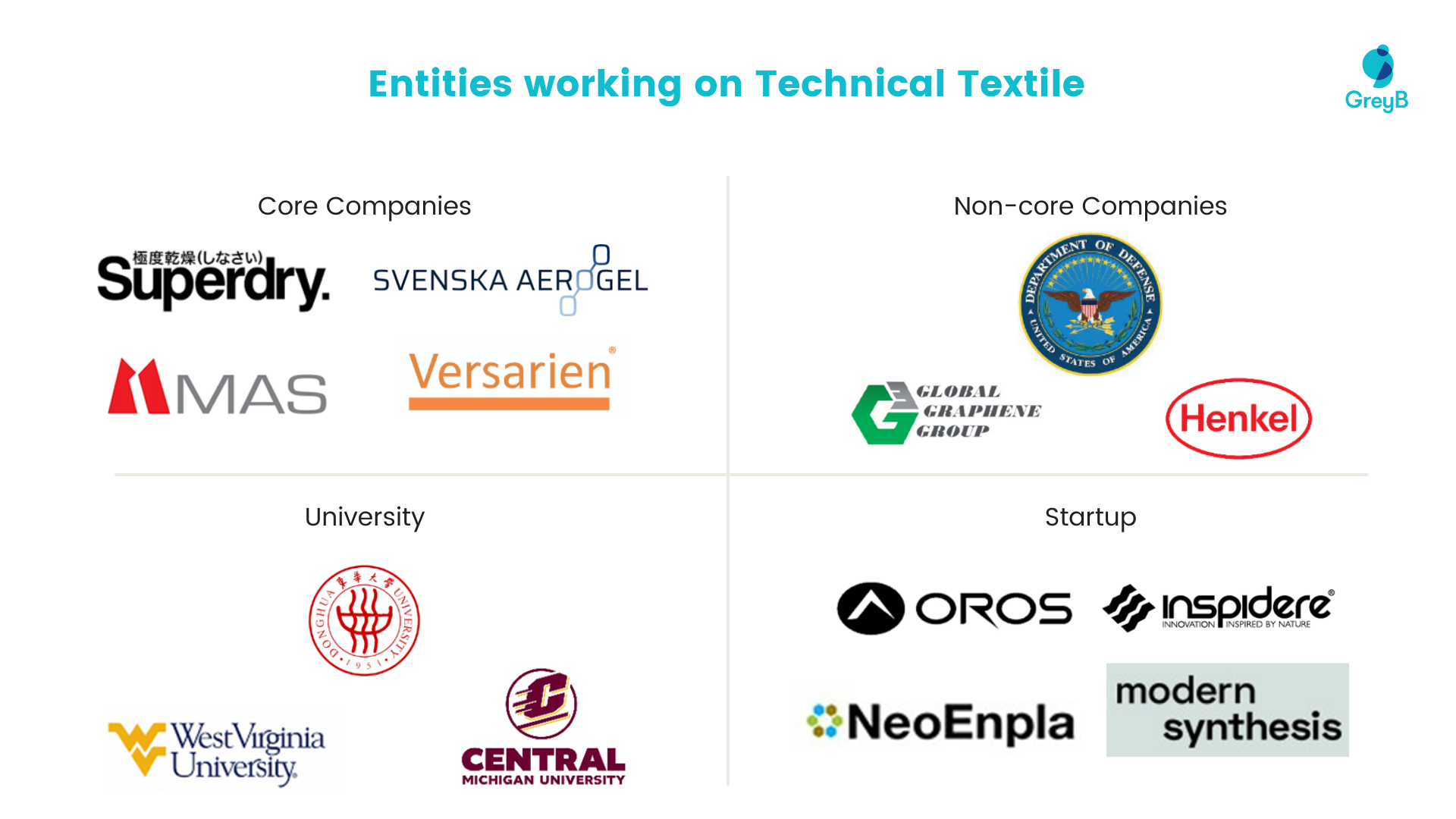
Who is working in Technical Textiles?
Significant Collaborations in Technical Textiles
Versarien, Superdry, and MAS
Superdry and MAS, renowned clothing brands, have joined forces with Versarien to create garments infused with graphene using Versarien’s cutting-edge Graphene-Wear technology. This technology is helping brands make their clothing more versatile, lightweight, and strong, as well as water-resistant, with interesting thermal and conductivity properties.
US Department of Defense & OROS
OROS has partnered with the U.S. Department of Defense to develop next-generation aerogel textiles specifically designed for extreme cold-weather apparel.
Since the company claims that their tech can maintain an internal temperature of 32°C, even in extreme cold as low as -196°C, this collaboration will definitely result in a breakthrough!
Technical textiles are only one of the significant trends within the textile industry. Several other trends are influencing the industry’s development.
Wish to know about these trends? Find all the details through our AI-based research platform, SLATE. Just ask your question and get answers within a few minutes.
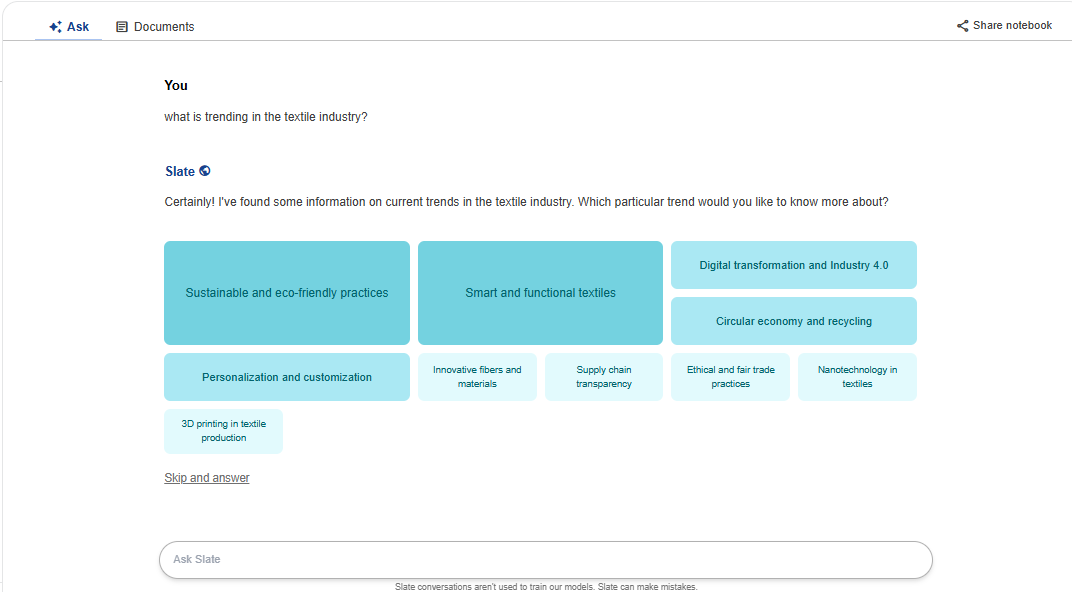
Try the tool yourself.
Authored By: Ambuj, Navjit, and Sushant, Patent Intelligence
Edited By: Ridhima, Marketing
Also Read: 5 trends in the textile industry steering a sustainable and tech-driven tomorrow