




Before the U.S. EPA proposed a rule prohibiting Perchloroethylene (PERC), several companies began seeking alternatives in their respective industries. Bio-based paint coatings are the most logical alternative, as this chemical is valued for its solvent capacity and its ability to remove oil, grease, and buffing compounds.
Bio-based paint formulations have a bright green future. They can reduce the paint industry’s environmental impact by lowering volatile organic compound (VOC) emissions and greenhouse gas emissions, while saving energy and resources.
Download the Sustainable Coatings Trends report by filling out the form below.

1. Livos Uses Plant Oil, Resins, and Mineral Pigments to make Bio-based Paints

Livos products are made from natural ingredients such as plant oils, resins, and mineral pigments. The company was established in 1973 and operates out of Germany and Australia.
Their formulations include linseed oil, damar gum, and plant-based substances such as linseed oil, lemon oil, beeswax, etc. They are designed to enhance the natural beauty of the wood while providing protection and durability.
According to Livos, their wood oils can enhance the durability, waterproofing, and resistance to wear and tear of wood surfaces. Livos states that up to 75% of the wood oil is absorbed during the first application, making only a thin second coat necessary. Their products suit various applications, including interior and exterior wood surfaces such as furniture, flooring, doors, and decks.
2. Auro makes bio paints using mineral fillers, cellulose, rapeseed, and castor oil.

Headquartered in Germany, Auro USA sells bio-based paints, natural oils, and waxes. Their paint compositions consist of renewable natural materials and minerals, free of VOCs & formaldehyde.
They have also developed a unique biogenic binding agent, Replebin®, which offers high abrasion resistance, reduces drip or spatter, emits zero emissions, and is safe to use in living areas.
Auro USA’s paints are available in various colors, finishes, and applications. They also offer a variety of natural oils and waxes for wood finishing.
Moreover, Stiftung Warentest, a German consumer organization, has declared AURO Woodstain No. 160 as the test winner (05/2006, test on wood stains).
Innovative Green Chemical Startups

3. BioShield Paint uses cellulose and chalk.

BioShield Paint Company manufactures natural and non-toxic paints, stains, and finishes. These paints are made with a blend of natural ingredients like clay, earth pigments, and plant-based oils. It is free from acrylic copolymers, formaldehyde, ammonia, ethylene glycol, solvents, or toxic heavy metals.
The company is headquartered in New Mexico and reportedly generates less than $5 million in revenue annually.
BioShield paints are also water-based, which makes them easy to apply and clean up. Their paints are ideal for dry, absorbent, and grease-free surfaces, like drywall, wood, clay plaster, and previously painted surfaces.
They are available in various colors and finishes for furniture, kitchen cabinets, and children’s rooms. BioShield also offers a variety of natural oils and waxes for wood finishing. Additionally, they are antistatic, breathable, dry to a matte finish, and washable.
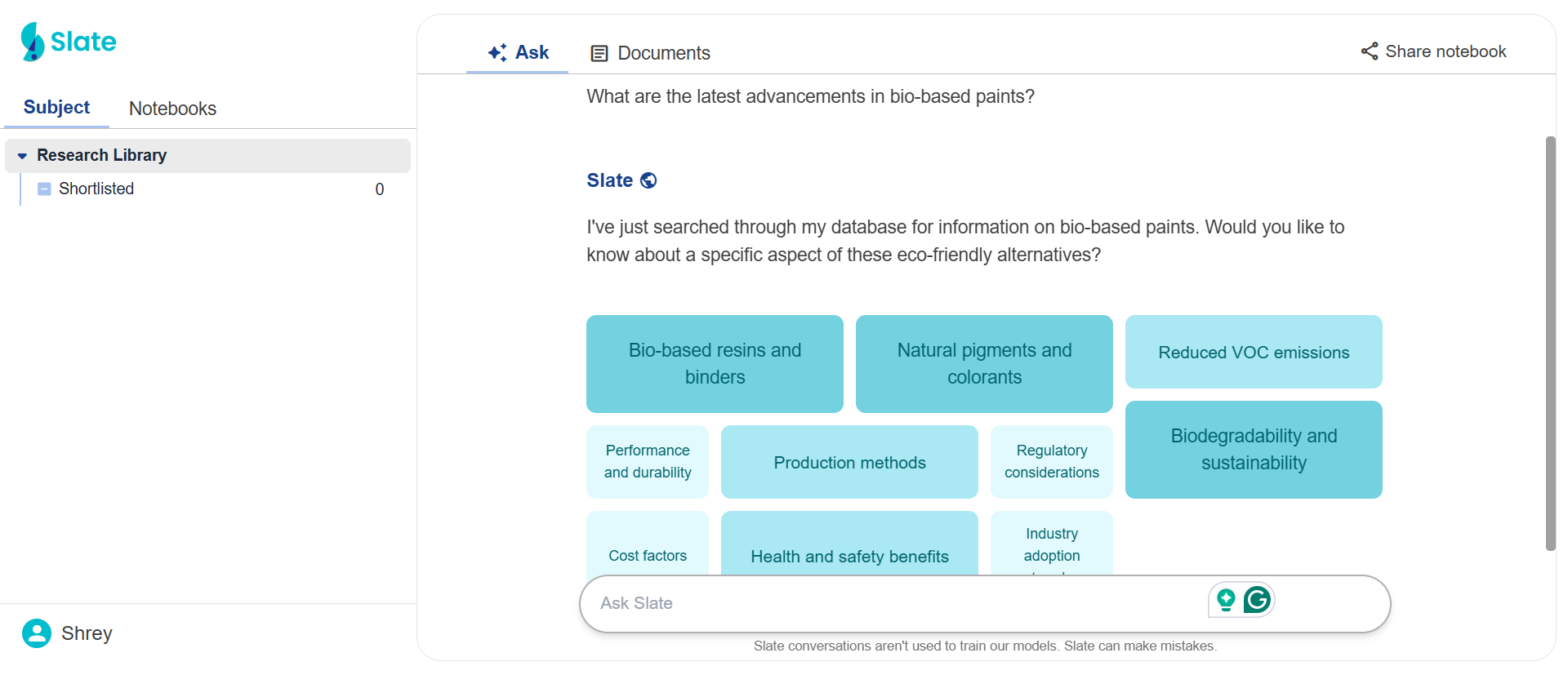
Discover many such advancements in bio-based paints with our in-house tool, Slate. Slate helps you identify trends before they become mainstream.
4. Silacote bio-based paints use quartz, inorganic mineral colorants, and potassium silicate.

California-based Silacote produces an inorganic mineral silicate paint known for its durability and environmental safety. This unique formulation bonds to surfaces such as concrete, natural stone, and marble, creating a durable, water-resistant compound.
Unlike traditional paints, which create a fragile film susceptible to cracking and peeling, Silacote penetrates the substrate, forming a microcrystalline structure that reflects heat. This unique quality ensures its longevity, even under harsh conditions such as acid rain and exposure to ultraviolet light.
Most silicate-based paints require factory tinting. However, Silacote can be tinted on-site using conventional tinting systems in local hardware stores.
Silacote’s non-combustible nature makes it a safer choice, as it will not burn or emit toxic fumes in the event of a fire. Additionally, when it’s time for a new coat, removing the old Silacote layer is unnecessary, making maintenance and renovation hassle-free.
Overall, Silacote offers superior protection and longevity, making it an ideal choice for interior and exterior applications.
5. Green Planet Paints® uses plant resins and mineral pigments.

Green Planet Paints® is owned and manufactured by Go Green World Products, LLC, which is headquartered in Arizona, United States. It offers a comprehensive range of architectural, interior, and exterior paints, wood and concrete stains, sealers, and colorants. These formulations are made from minerals, clays, plant oils, and water-based materials.
All the raw materials used in Green Planet Paints’ products are vegan. Their coating products are also free from harmful chemicals such as Isothiazolinones, Methylisothiazolinone, Methylchlorisothiazolinone, Benzisothiazolinone, Octylisothiazolinone, Parabens, Bronopol, BHT, and heavy-metal carcinogen dryers.
Their exclusive mineral colorant systems, Agri-Colors, offer zero VOCs, making them 100% sustainable with over 80% recycled bio-content. The coating products are also safe for the environment and can be used around children, pets, and individuals with chemical sensitivities.
6. RMP Finishes uses milk, calcium lime, and plant-based filler.

RMP Finishes offers an all-natural paint crafted from non-toxic ingredients derived from milk and minerals. It lacks volatile organic compounds (VOCs), making it virtually odor-free and requiring no ventilation during application. Its fast-drying formulation works effectively on various surfaces, making it suitable for indoor and outdoor projects.
The company is based in Tennessee, United States, and reportedly generates about $1.1 million in revenue annually.
RMP Finishes offers 56 shades of diverse colors to match preferences for in-home or outdoor decor. This paint is safe for children, as it undergoes thorough testing and meets the requirements set by the CPSC (US Consumer Product Safety Commission). Additionally, to achieve a polished finish on completed projects, the Real Milk Paint Co. offers an array of nontoxic topcoats in various finishes.
The Path Forward for Bio-based Paints
Bio-based paints help companies adapt to the changing regulatory landscape and implement more sustainable practices. In the coming days, Asia Pacific, North America, and Europe will be the regions with the most growth in the bio-paint market. Specifically, China, India, Brazil, and South Africa are best positioned to be regional market leaders over the next seven years.
By adopting these eco-friendly options, businesses can demonstrate their commitment to environmental responsibility while providing safe, healthy choices for their customers.
How can you become one of them?
Get in touch with GreyB to understand the latest FMCD market trends and find technologies & startups working on them.